Agriculture
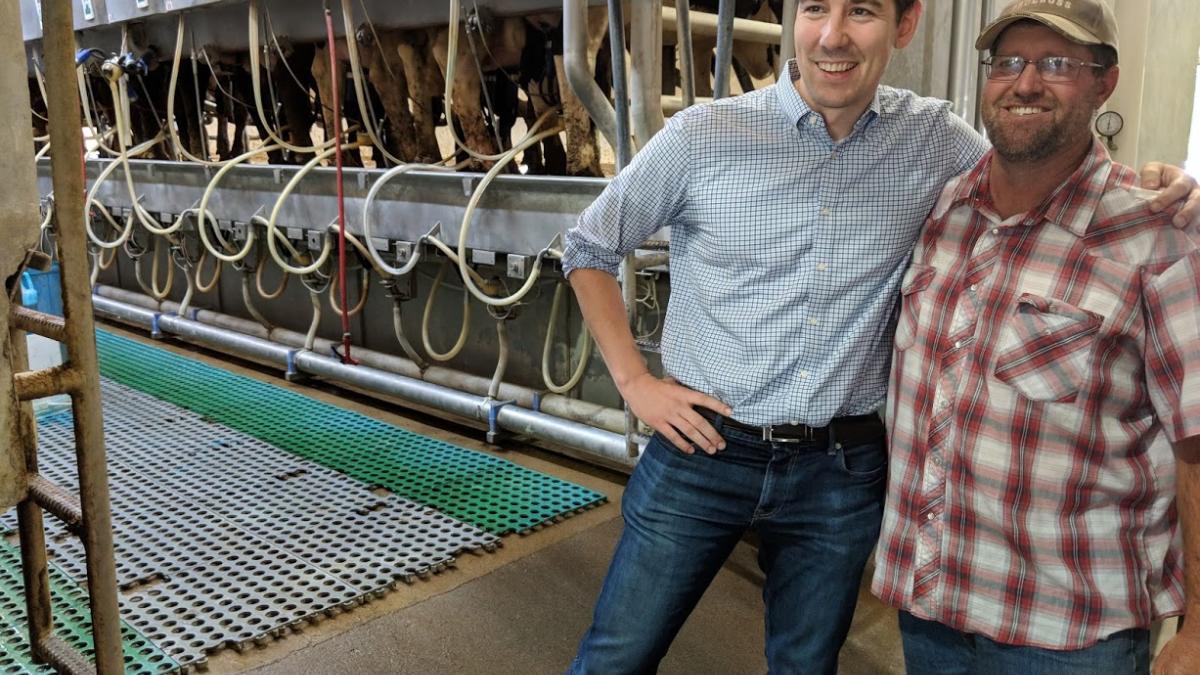
My great-grandfather came to the Central Valley to farm peaches in Manteca back in the 1850s. Just about everyone you talk to around here has a similar story. Agriculture is not only a key driver of our local economy and a source of jobs, it’s also an important part of who we are.
The Central Valley is the fruit and nut basket of the world – which is why I fought to serve on the House Agriculture Committee. One of my most important roles in Washington is serving as the voice of our local growers and producers on the committee. It’s vital that we have clear Farm Bill implementation and a trade policy that actually works for our farmers and families. My job is to make sure that federal agriculture policy works for our farmers – not just folks in other parts of the country.
My office is dedicated to helping our farmers in any way possible, if you need help cutting through red tape with the USDA please contact us.
For more information concerning work and views related to Agriculture, please contact our office.
More on Agriculture

Modesto, CA – Representative Josh Harder (CA-10) is calling on the Federal Emergency Management Agency (FEMA) to expand FEMA housing criteria to support agriculture workers, who are on the frontlines and have been working throughout the Coronavirus Pandemic.

WASHINGTON – Representative Josh Harder (CA-10) and Senator Dianne Feinstein today introduced the Snow Water Supply Forecasting Program Authorization Act to establish an airborne snow observatory (ASO) and measurement program within the Department of the Interior. Without accurate readings, water managers could be forced to unnecessarily release water from reservoirs or use it for groundwater pumping, resulting in millions of dollars in financial losses.
WASHINGTON – After securing substantial support in last year's funding package, Representative Josh Harder (CA-10) announced that this year's water development funding bill also includes millions in funding for water storage projects which benefit the Central Valley. The bill passed the House today on a vote of 217-197.

Ninety-Nine Percent of U.S. Walnut Production Based in CA

WASHINGTON – Representative Josh Harder (CA-10) today announced that the Department of Health and Human Services (HHS) will invest $2,334,992 to help continue Migrant Head Start programs in the Central Valley. The Migrant Head Start program provides comprehensive early childhood education and general health and nutrition assistance to primarily children of migrant and seasonal farmworkers.
WASHINGTON – After Representative Josh Harder (CA-10) led an effort to make California eligible to receive federal funding to eradicate invasive nutria, the House of Representatives passed legislation that allows the state to apply for millions of dollars in federal funding to combat the pest. The bill also increases the total amount allocated to three programs through the Fish and Wildlife Service which help states and local residents combat invasive species, including the nutria.

Modesto, CA – In response to concerns from county and state fair leaders, Representative Josh Harder (CA-10) is introducing the Protecting Fairs During Coronavirus Act. The bill would create a new emergency grant program to help offset the massive revenue losses our fairs are experiencing because of health care measures taken to combat the Coronavirus Pandemic. Hundreds of thousands of Californians attend these fairs every year and generate approximately $3.5 billion in annual economic impact.

Over 50 Members of Congress Join Effort

WASHINGTON – After the Supreme Court ruled that the Trump Administration acted illegally in its attempt to eliminate the Deferred Action for Childhood Arrivals (DACA) program which protects approximately 10,000 Dreamers in the Central Valley, Representative Josh Harder (CA-10) asked United States Citizenship and Immigration Services (USCIS) to clarify its plans for the future of the program and abandon efforts to sidestep the Supreme Court Ruling.
WASHINGTON – Today, Representative Josh Harder (CA-10) introduced the Future of Agricultural Resiliency and Modernization (FARM) Act which would help farmers across the country to more effectively fight climate change. The bill would establish two new climate-focused initiatives to support the efforts of farmers on the ground. The first would provide over $2.5 billion in funding to help farmers reduce greenhouse gas (GHG) emissions, increase carbon sequestration, improve air, water, and soil quality, and convert agriculture byproducts to efficient uses.